Web Services
ASP.NET Development
Sphere 10 develops ASP.NET Core applications with C#, MVC, Razor Pages, Blazor and explicit HTTP APIs. We build customer portals, operator workspaces and business integrations backed by SQL Server or PostgreSQL, with authentication, validation, transactions and deployment designed together. REST/OpenAPI and gRPC boundaries are selected for the callers and workflow, while the application keeps authority over its records, permissions and completion rules.
We select the presentation and API structure around the work being performed. A public information page, an operator editing many records and a machine-to-machine integration require different interaction and security boundaries. Sphere10 Framework supplies maintained ASP.NET Core hosting and MVC foundations alongside application lifecycle, logging and data-access mechanisms. We use those components where they suit the project, keeping the application's own domain rules explicit and independent of any particular browser screen or transport.
Match HTTP Boundaries to the Application
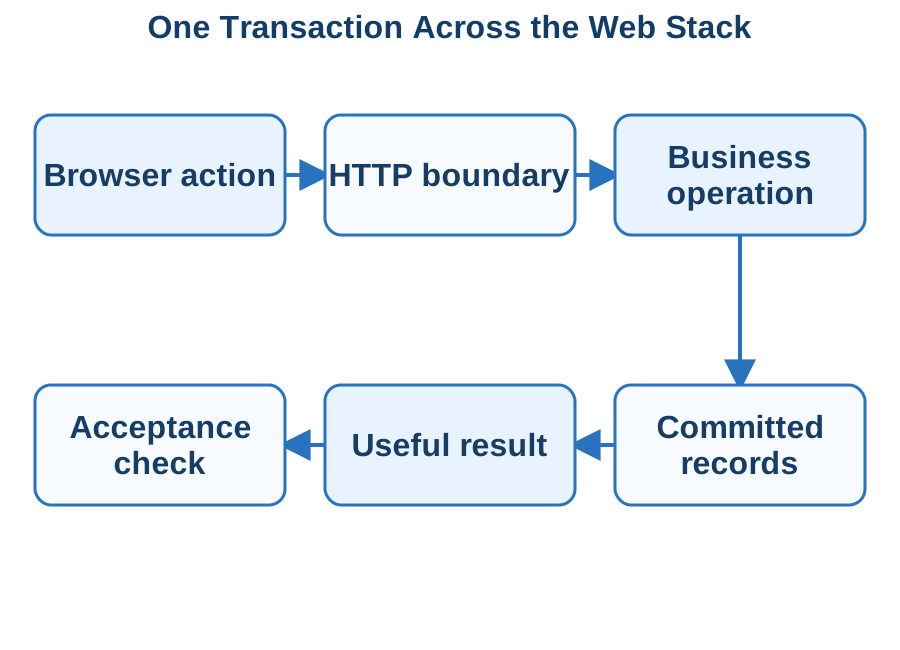
We structure controller or Minimal API endpoints around the operations clients need and publish the agreed OpenAPI contract. Browser sign-in uses the selected cookie and OpenID Connect flow; APIs validate OAuth access tokens and enforce resource-level authorization. Microsoft Entra ID integration includes redirect addresses, claims and application roles. Validation errors, conflicts and missing records receive deliberate HTTP and Problem Details responses that clients can handle consistently.
HTTP behaviour is part of the contract: a missing record, denied operation, invalid form and temporary dependency failure need different responses. Cookie-authenticated browser forms receive appropriate request-forgery protection, while API callers receive machine-readable outcomes. We define upload handling, redirects and error presentation without exposing internal exceptions or accepting client-controlled ownership fields.
Implement Changes as Business Operations
Business commands execute through application services with explicit transaction and authorization boundaries. EF Core or NHibernate maps the selected SQL Server or PostgreSQL model, with controlled session lifetime, concurrency checks and reviewed generated SQL. We use projections, bounded paging and deliberate fetch plans for reads. Imports and external calls have their own operation identities and progress records, keeping a local commit and a provider response distinguishable.
An order or approval command accepts only the fields its operation permits, loads the authoritative records and checks their current version before committing. The service returns an explicit conflict when another user changed the record. Read endpoints use bounded projections so a convenient object graph cannot become an unrestricted export of related data.
Deliver a Complete Web Runtime
The delivered runtime includes the .NET publish output, configuration, database migrations and the selected IIS or Kestrel/Nginx host. We configure proxy trust, TLS, cookie settings, upload limits and health endpoints with that topology. OpenTelemetry and structured logs connect a browser action to its API, database and external calls. The release is exercised with actual sign-in, a permitted transaction, a rejected operation and a restart.
Deployment includes supported runtime prerequisites, configuration, secrets, database setup and useful logging. We define request limits, health checks and reverse-proxy handling alongside the application. The handover connects the source build to a versioned release and explains how to install it, inspect failures and recover from a rejected update.
Verify the Browser and Server Together
We demonstrate complete workflows with valid, invalid and unauthorized requests. Acceptance also covers direct navigation, session expiry, interrupted operations and the expected data volume. The delivery includes source code, build instructions, database setup and a reproducible deployment package.
The delivered host is checked with its real reverse proxy, public base address and deployment subpath. We inspect redirects, secure-cookie behaviour, forwarded scheme handling and generated links under that topology. Database migration is rehearsed against retained records, and diagnostics must correlate a failed browser action with the server operation that handled it.
Technologies & Integration
Discuss Your Web Project Back to Web Services
Blazor Development
Sphere 10 builds Blazor applications for record-heavy operational software: administration workspaces, guided processes, dashboards and complex editing screens. We combine C# components with explicit application services, so the interface supports real business tasks and remains predictable when a save fails, a session reconnects or another operator changes the same record. Navigation, validation and state ownership are designed together.
Our Sphere10 Framework includes an Interactive Server Blazor foundation with typed CRUD columns, buffered editing, validation, reference selectors, paging and asynchronous commands. Its application workspace provides retained screens, navigation guards, dialogs and wizards. These maintained components give us a concrete base for business interfaces. We assess hosting latency, concurrency and connectivity before selecting the render mode, and keep the application's persistent state and business authorization separate from the temporary component state used to present a task.
Select Hosting With State Ownership in Mind
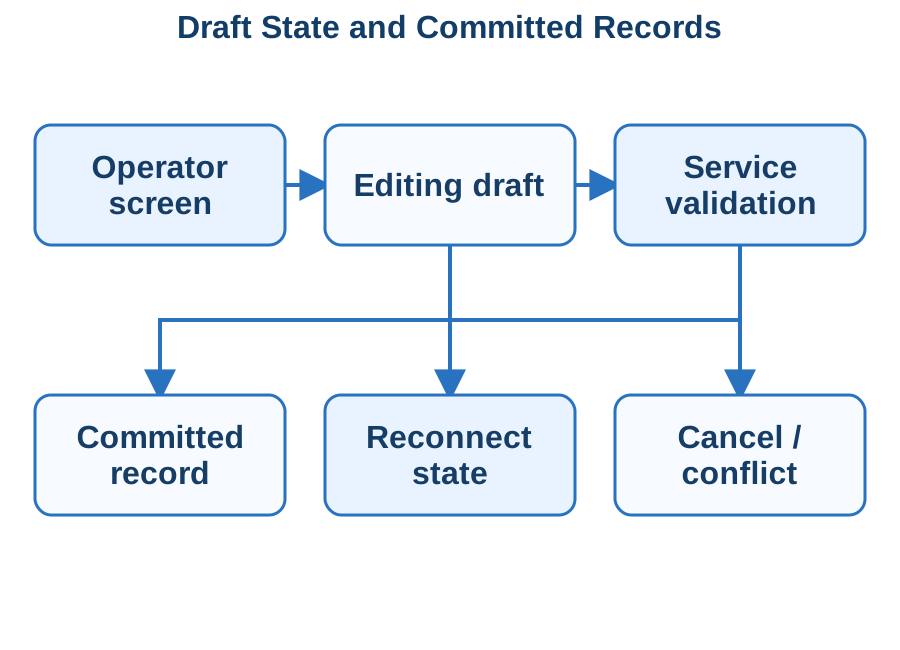
We choose Static SSR, Interactive Server, Interactive WebAssembly or Auto according to the screen's execution, latency and data-access needs. Interactive Server uses a SignalR circuit and server-held component state; browser WebAssembly uses explicit service contracts for protected data. For an installed .NET MAUI Blazor Hybrid application, Razor components execute in the native .NET process and display through BlazorWebView. The deployment and state model are documented with that choice.
We distinguish static rendering, server interactivity and browser execution according to the product's requirements. Interactive Server work includes circuit lifetime, reconnection and resource cleanup. We select dependencies for the actual render mode; an existing server-oriented component is evaluated before reuse in WebAssembly or a native Hybrid host.
Make Record Editing Predictable
Editors use a deliberate form model, EditContext and validation pipeline, with asynchronous commands that expose pending, failed and completed outcomes. EF Core or NHibernate work is performed inside short application operations, and version checks protect a saved record from a stale draft. We define server-side sorting, filtering and paging for grids and reference selectors, including the query and permission rules behind each choice.
Reference selection is treated as a query, not a download of every related record. We define search, display labels, allowed choices and paging against realistic volumes. A save uses a fresh service-side permission and version check; the editor can then preserve the draft and explain a conflict without silently discarding the operator's changes.
Compose an Operator Workspace
We compose retained screens, dialogs, wizards and navigation guards around the operator's workflow. Sphere10 Framework's existing Interactive Server components can supply the maintained CRUD and workspace foundations described above. Where a project selects Telerik UI for Blazor, we integrate its grids, editors and export features through the same application contracts. Component state, subscriptions and asynchronous commands have explicit disposal and cancellation behaviour.
The workspace organizes screens around operator responsibilities rather than an arbitrary menu tree. Retained screens, dialogs, workflows and reference lookups share a consistent navigation and command model. We connect loading, empty and failed states to the same application services, and provide meaningful progress for imports, exports and other operations that take time.
Test Reconnection and Long-Running Interaction
Acceptance includes editing and cancelling, failed saves, permission changes, narrow screens and a disconnected or expired session. We measure the behaviour of real data-heavy screens rather than judge only a static design. You receive source components, service registration, theme configuration and deployment instructions, plus the scenarios used to verify the workspace.
A disconnected circuit may retain temporary interface state while a final disposal must release its resources. We check subscription cleanup, cancellation and late asynchronous results during navigation or screen closure. Database sessions are scoped to application work rather than kept open for the entire browser interaction, limiting stale tracking and accidental cross-command transactions.
Technologies & Integration
Discuss Your Web Project Back to Web Services
Notion-Driven Websites
Sphere 10 builds Notion-authored websites with Local Notion, our .NET publishing application. Native Notion Pages, data sources, properties, child Pages and media form the editing model; shared themes turn that structure into a consistent public website. We deliver service and product sites, technical articles, documentation and resource libraries with calculated routes, original attachments, preview and an inspectable publication process.
This is a complete publishing service, including editorial views, media handling, preview, deployment and operating guidance. Local Notion is our .NET content and rendering application, with downloaded source, attachments and publication artefacts that can be inspected separately. We use that owned engineering foundation to make the website maintainable: content stays in the CMS, presentation stays in the styling engine, and generated HTML remains reproducible output. Your team receives an authoring model that reflects the actual website rather than a collection of pages with undocumented exceptions.
Define Native Content Roles and Routes
We define native Page, Section, Gallery, Menu, Header, Footer and Resources ownership against the actual Local Notion CMS schema. Notion data-source queries, parent relationships and Page titles determine how editors find content and how the website calculates its hierarchy. We configure purposeful database views, consistent properties and native child Pages, then check each route and breadcrumb against the saved ancestry.
Shared navigation and footers have their own editing responsibility and are checked wherever they appear. We separate those records from article copy, so an editor can update contact details or a navigation destination without editing every Page. Content ownership and the permitted editing workflow are documented alongside the site map.
Build Presentation in the Theme Engine
We use native Notion headings, paragraphs, images, lists and columns for authoring. Reusable themes, modifiers and tags control presentation and supported behaviour. Custom design work belongs in a versioned theme package, with shared overrides for palette, typography, links and responsive layout.
An illustrated article can place two related introduction paragraphs beside one image using native Columns, then stack in reading order on a phone. Heading backgrounds, link hover states and image overlap are defined in reusable theme rules. Editors change the content structure while a versioned design package keeps that composition consistent across the site.
Create an Inspectable Publication Pipeline
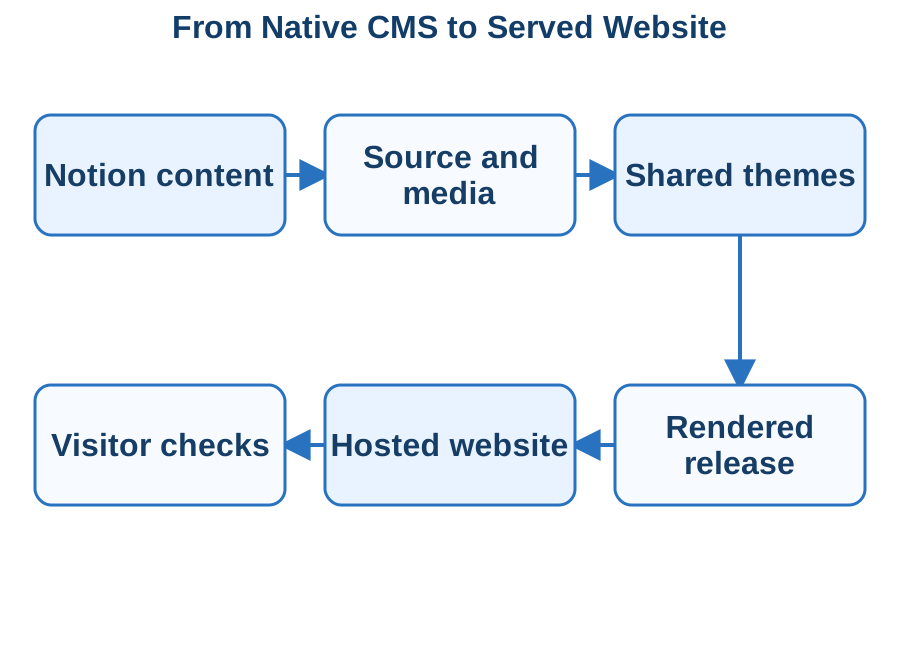
The publication process reads paginated Notion blocks and original media, records the native owner and renders the selected theme generation. We handle documented API limits and bounded source refreshes, including nested edits whose parent timestamp is unchanged. HTTP caching, asset identity and deployment are verified against the generated files. Nginx and Cloudflare configuration, where selected, are checked with both public routes and backing-file access policy.
The pipeline captures source and media, renders the selected website and promotes a reviewed release to hosting. We keep saved Notion state, downloaded cache, generated output and served files distinct in verification. Publication includes route, asset and access-policy checks, with a repeatable procedure for updating an owner whose changed descendants were not refreshed normally.
Accept the Website From Both Sides
We demonstrate an editor updating content and follow that change through rendering to the hosted result. Visitor checks cover links, breadcrumbs, media, hover states, keyboard focus and representative phone layouts. Handover includes the theme sources, CMS conventions and operating guide.
A service update is verified beyond its overview link: the child article must show the revised copy and image, navigation must retain the correct parent, and cached assets must belong to the same release. The release record identifies content ownership, theme generation and the hosted result, so an editor can diagnose where an update stopped.
Technologies & Integration
Discuss Your Web Project Back to Web Services
SPA Development
Sphere 10 builds single-page applications with React and TypeScript, Angular, Vue or Blazor WebAssembly connected to ASP.NET Core services. The client manages navigation, selection and editing state; the .NET API owns authorization, business rules and persistent records. We deliver operational dashboards, customer portals and interactive workflows with defined behaviour for sign-in, concurrent edits, delayed requests and interrupted connections.
We design the navigation and failure behaviour before building a large component tree. Direct URLs, interrupted requests, stale results, concurrent editing and returning from sign-in are normal parts of the product. React and TypeScript provide a strong client option where their execution model fits; our Sphere10 Framework supplies reusable .NET application, data and ASP.NET Core foundations behind the interface. We connect those distinct application layers through explicit service contracts and acceptance scenarios, keeping transport details separate from the customer's business rules.
Define Client State and Navigation Together
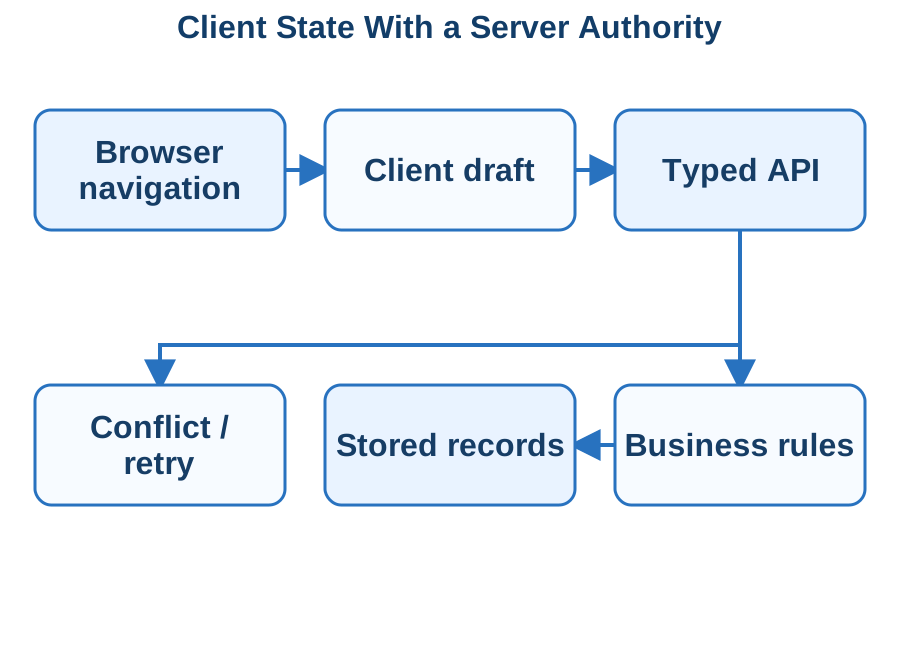
Client routing defines shareable addresses, browser history and the treatment of unsaved work. React components and query caching, Angular routing and observable request flows, or Vue components with Pinia state are selected to suit the application. We distinguish server-owned query results from local drafts and UI state, define invalidation after a successful command, and prevent a stale response from replacing a newer selection.
Route parameters, search filters and selected records receive a defined URL representation so links can be copied and browser history remains useful. A dirty editor decides whether navigation is blocked, discarded or resumed. On return from authentication, the application restores the authorised destination without treating a stale local selection as a current server record.
Connect Components to Explicit Service Contracts
The ASP.NET Core API publishes a versioned OpenAPI contract with bounded query parameters, explicit validation and optimistic-concurrency outcomes. Authentication uses the selected OpenID Connect/OAuth design, including a backend-for-frontend session where appropriate. Client types are generated or checked against the contract, while the service independently validates permissions and input. Cancellation, token expiry and reconnect are exercised through the same business operation.
The API exposes the operations the screens require, with typed results, validation detail, paging and concurrency outcomes. We prevent older responses from overwriting a newer selection and define cancellation for abandoned work. Authentication and authorization remain enforced on the service even when the client hides or disables an unavailable action.
Package a Browser Application That Can Be Operated
A component and state structure that supports the agreed workflows without duplicating business rules. Responsive layouts, keyboard navigation and accessible feedback for validation and request failures. An authenticated API integration with consistent errors and record-level access checks. Build, environment and asset-cache configuration for repeatable releases and direct-route hosting.
Builds produce versioned client assets and compatible service contracts, with documented environment configuration and cache behaviour. We provide useful loading and failure states during deployment or dependency outages. Telemetry connects a user operation to its backend work, allowing support to diagnose a broken journey without collecting unnecessary sensitive screen data.
Accept Real Journeys Across Interrupted Requests
We test back and forward navigation, direct links, expired sessions, slow responses and concurrent edits. Representative device checks include touch targets and long or wrapped content, not just reduced desktop screenshots. Handover contains the client source, API contracts, build pipeline and regression scenarios.
Race tests deliberately return requests out of order while a user changes filters or opens another record. The interface must keep the newest intended result and cancel or ignore obsolete work. We also inspect the initial HTML and direct-route server behaviour, including whether public content needs server rendering and authenticated routes return the correct application shell.
Technologies & Integration
Discuss Your Web Project Back to Web Services
eCommerce Applications
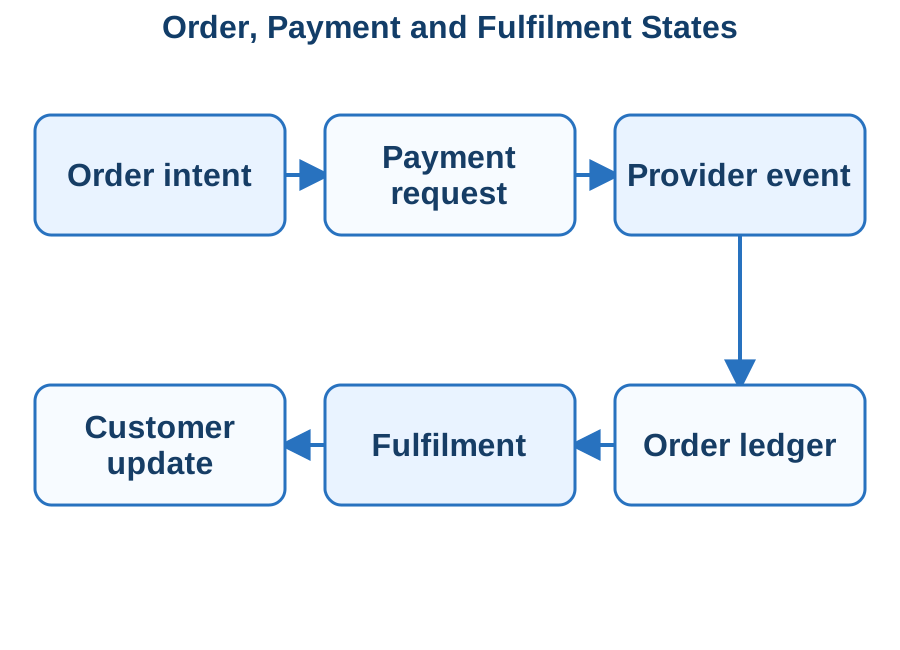
Sphere 10 builds .NET commerce applications and connects established storefronts to the organisation's order, stock and accounting systems. We develop custom ASP.NET Core and nopCommerce workflows, or integrate Shopify and WooCommerce through their APIs and webhooks. Stripe, Adyen or PayPal payment events are reconciled to an owned order ledger, covering payment attempts, stock reservation, fulfilment, refunds and the staff tools needed to resolve exceptions.
We model the commercial behaviour before integrating a provider or building checkout screens. Account pricing, stock reservation, tax inputs, renewal rules and partial fulfilment affect both data and user interaction. Our enterprise application engineering includes products, account access, subscriptions and signed licence operations, with Sphere10 Framework application and persistence mechanisms used where they fit. We apply that transaction discipline to your commerce model while keeping your organisation's product rules, customer policies and approval responsibilities explicit.
Establish Product, Price and Availability Ownership
We establish the product, variant, customer, price and order model before connecting a storefront. Shopify or WooCommerce product and order identifiers are mapped to the authoritative stock or ERP records; a nopCommerce or custom .NET implementation exposes the same business decisions through its application services. Price generation, configured tax inputs, shipping rules and stock reservations are recorded with the accepted order so later events can be reconciled correctly.
We identify the system responsible for each commercial value and when it becomes binding. Product catalogue, customer account, promotion and inventory data receive defined update paths. The design covers unavailable items, expired prices and partially completed orders, with operator permissions for exceptions rather than hidden edits to production records.
Reconcile Payments With the Order Ledger
The payment adapter records the provider payment identity, order allocation and permitted state transitions. Stripe, Adyen or PayPal webhook signatures are verified with the provider's documented method, and duplicate event identifiers are handled idempotently. We compare the authoritative provider outcome with authorised, captured, refunded and disputed amounts in the ledger. Checkout return URLs inform the interface while recorded provider evidence drives payment reconciliation.
We model authorised, captured, refunded and disputed amounts separately from fulfilment status. A refund is a recorded operation against a specific provider payment and order allocation. Partial refunds, multiple attempts and late events reconcile through permitted transitions, so a status notification cannot accidentally release stock twice or erase the history of a previous charge.
Connect Fulfilment and Customer Communication
We connect recorded order and payment changes to warehouse, dispatch, accounting and customer-service operations through versioned adapters. A Shopify fulfilment event, an ERP stock reservation and a payment refund retain their own identifiers and progress. Staff receive views for unmatched events and incomplete work, with a controlled action for retrying or reconciling the specific operation. The integration test follows an order through partial fulfilment and a recorded adjustment.
The delivery includes the storefront or portal, payment adapters, administration and agreed connections to stock, accounting and dispatch systems. Notifications follow recorded state changes and can be inspected by staff. We provide reconciliation views for outstanding payments, failed fulfilment and inconsistent provider events so support can act with the relevant evidence.
Accept Duplicate Events and Uncertain Outcomes
Acceptance includes failed and uncertain payments, duplicate callbacks, cancelled checkout and a customer returning after session expiry. Subscription projects also verify renewals, paid-through periods and entitlement changes. We use provider test facilities for development and keep live activation a separately configured release step.
Order totals are verified from the recorded price generation, quantities, discounts and configured tax or shipping inputs. Money uses explicit currency and rounding rules. We exercise partial fulfilment and cancellation after reservation, checking that inventory, customer communication and accounting export reflect the same accepted order outcome rather than independent approximations of it.
Technologies & Integration
Discuss Your Web Project Back to Web Services
Static Websites
Sphere 10 delivers static websites using Local Notion or source-controlled generators such as Astro, Hugo and Eleventy. We build service and product sites, documentation, resource libraries and campaign pages as deployable HTML, CSS, JavaScript and media. The design includes reusable templates, content ownership, accessible navigation, search metadata and deliberate boundaries for forms or authenticated services, with delivery through the selected web host and CDN.
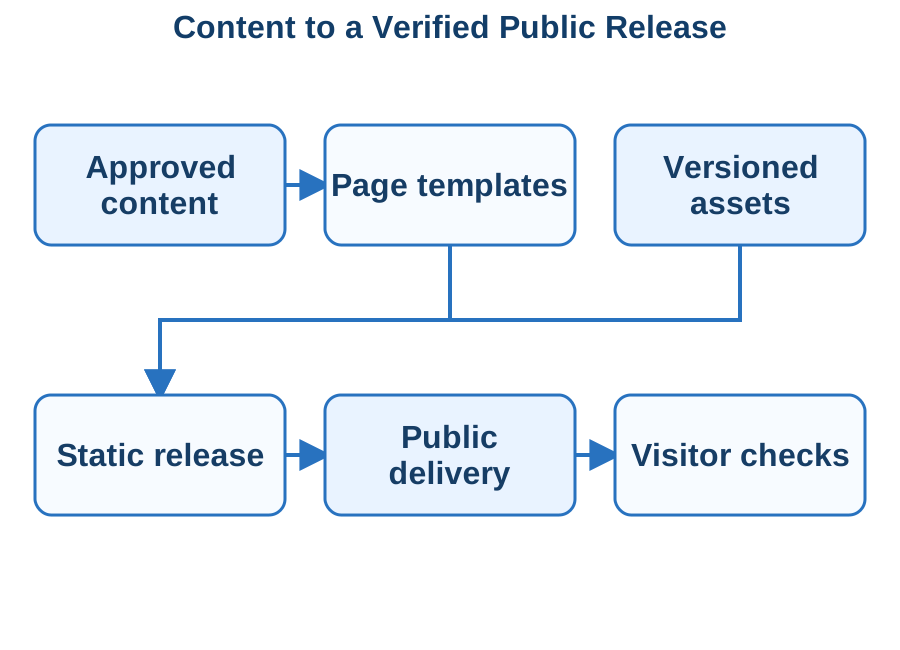
Our Local Notion product supplies a concrete .NET publishing foundation for teams that want to author content in Notion. We also implement source-controlled content workflows when that suits the organisation's editorial process. In either case, the website's source, generated files and hosting configuration are maintained deliberately. Your team receives an understandable route from an approved content change to the actual public result, including media preparation, navigation, caching, search metadata and verification at desktop and phone sizes.
Separate Public Reading From Dynamic Operations
Static output is a strong fit when visitors mainly read content, follow links and contact the business. We identify genuinely dynamic requirements, such as account access or transactional forms, and connect those to explicit services. That avoids turning an otherwise simple website into an unnecessarily complex application platform.
We map the visitor's main paths, including service discovery, product comparison, technical reading and enquiry. Content that can be generated becomes straightforward static output. Forms, authenticated functions and external integrations receive their own stated boundaries, keeping the public site's delivery model clear while supporting the operations that need a service.
Design Reusable Page and Content Families
Local Notion themes or the selected Astro, Hugo or Eleventy templates define reusable article, product, service and landing-page families. We model shared navigation, metadata, canonical URLs, social-preview images and responsive media alongside the content. Interactive components receive a specific purpose and asset budget. Generated HTML is checked with real long headings, code, lists and images so the editorial system remains usable across the site.
A technical article, product page and campaign landing page need different content lengths within the same visual system. We test those cases with real headings and images before approving a template. Shared header and footer elements retain usable navigation when a page grows, while important information remains available without depending on a typed animation finishing.
Publish Versioned Pages and Media Together
The release joins generated pages and their exact asset generation in one reviewed deployment. We configure Nginx, object hosting or the selected CDN with explicit content types, compression, redirects and HTTP cache policy. Fingerprinted or otherwise versioned assets can receive long-lived caching while HTML follows its update requirements. Preview and public checks cover deep routes, missing-page handling and the enquiry or integration endpoint used by visitors.
The publishing package includes generated pages, original source, reusable assets and hosting configuration. We coordinate asset identity and caching so a new page does not depend on an old stylesheet or missing image. Release checks include calculated addresses, redirects, metadata and access to any private source files kept alongside the publication tooling.
Verify the Hosted Reading Experience
Acceptance checks cover the complete public route list, representative content lengths, missing resources, keyboard use and narrow layouts. We verify the generated files and the served site separately, including the actual stylesheet version received by a browser. Handover includes source assets, publishing instructions and a rollback procedure.
The release check starts from visitor entry points: an old bookmark, a search-engine link and a shared article URL. We inspect missing-page behaviour, redirect chains, canonical metadata and social-preview assets. A release manifest connects page and asset generations so support can identify which published version a reported broken link or missing image belongs to.
Technologies & Integration
Discuss Your Web Project Back to Web Services
Backend Development
Sphere 10 develops C# backends with ASP.NET Core REST/OpenAPI or gRPC services, .NET Worker Services and explicit database ownership. We integrate SQL Server or PostgreSQL through EF Core, NHibernate or provider-level access, with Redis, RabbitMQ or other infrastructure selected for a defined caching or messaging role. The service package includes domain operations, authentication, durable processing, diagnostics and the configuration needed to deploy and operate it.
The design begins with the operation and its authoritative state. Creating an order, accepting a document or importing a dataset each has a different completion boundary and recovery requirement. Sphere10 Framework contributes reusable application composition, persistence, serialization and communication mechanisms; the application's domain model and operating policy remain specific to your organisation. We build those layers together with the diagnostics and deployment configuration needed to run them, including work that must survive request cancellation, process restart or an unavailable external provider.
Expose Business Operations Instead of Database Tables
Commands and queries receive explicit request, authorization and response contracts. ASP.NET Core policies and OpenID Connect/OAuth token validation protect operations at the service boundary; OpenAPI or Protocol Buffers describes the agreed interface. EF Core or NHibernate loads the records required for a command and applies concurrency and transaction rules. Read paths use projected, bounded results with stable ordering instead of exposing the persistence model directly.
An API contract defines maximum page size, stable ordering and the fields a caller can change. A command such as approve invoice names the decision and its required authority; it does not expose an unrestricted entity update. We design correlation and conflict information so browser, mobile and integration clients can present the same meaningful outcome.
Own Transactions and Integration Recovery
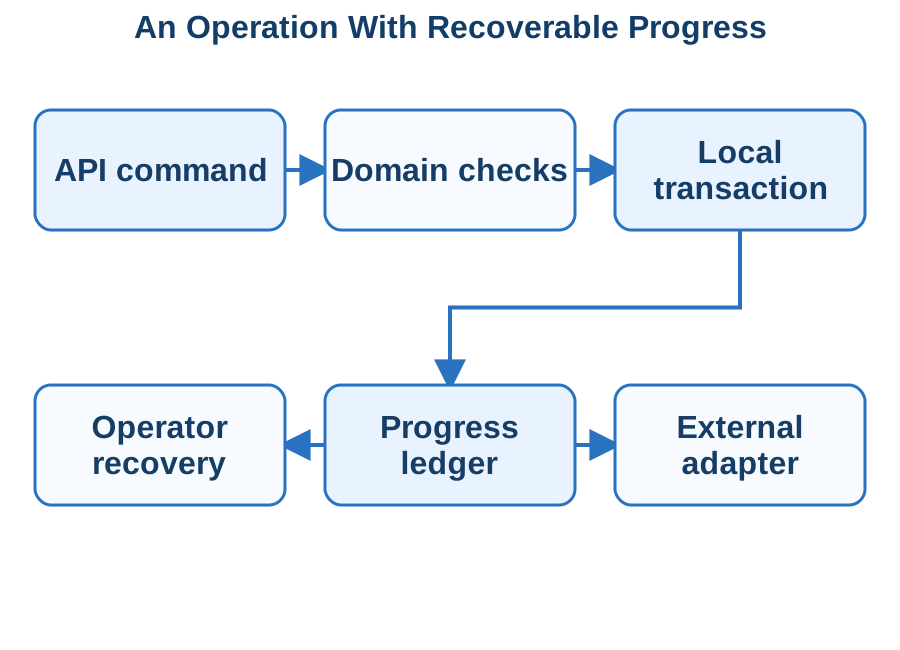
SQL Server or PostgreSQL owns the local business transaction. A durable outbox or progress record coordinates later RabbitMQ delivery, HTTP calls or background processing, and the worker records a stable operation identity before applying an external result. Redis caching has an explicit invalidation and expiry policy tied to that authoritative state. HttpClient connection reuse, timeouts, cancellation and retry decisions are configured for the actual dependency and idempotency contract.
Local transactions govern related database changes, while external effects use explicit workflows and recorded progress. Stable identifiers allow duplicate detection and reconciliation after an interrupted call. We define timeouts, cancellation and retry policy at each boundary, keeping an uncertain provider result visible instead of treating another request as an automatic correction.
Deliver Services That Explain Their Work
We deploy the selected ASP.NET Core host and .NET workers with versioned configuration, secret access and database migrations. OpenTelemetry traces and metrics connect requests, database calls and messages to the business operation; structured logs retain useful failure context. Health endpoints and operator queries distinguish process liveness from useful service readiness and expose incomplete operations that require a specific recovery action.
The service package includes domain operations, persistence mappings, integration adapters and the hosting configuration. Structured logs and correlated diagnostics identify the affected operation without exposing credentials or excessive personal data. Operators receive views or commands for inspecting incomplete work and performing the permitted recovery action against its recorded state.
Prove Behaviour When Dependencies Fail
Acceptance includes unauthorized records, conflicting updates, malformed requests and interrupted external calls. We test the meaningful workload against realistic data, measuring bottlenecks rather than assuming that asynchronous code is automatically scalable. Handover contains source, API documentation, operational limits and recovery instructions.
Fault injection targets the interval after a local commit but before an external acknowledgement or HTTP response. We inspect the stored operation and repeat the same request identity to establish its outcome. A background worker is also stopped between items, proving its checkpoint and poison-item handling without skipping or rerunning unrelated completed work.
Technologies & Integration
Discuss Your Web Project Back to Web Services
AWS/Azure Architectures
Sphere 10 designs AWS and Azure environments for .NET applications, data services and integrations. We evaluate Azure App Service, Container Apps or AKS and Amazon ECS/Fargate, EKS or EC2 against workload and operating requirements, then select SQL and object storage, messaging, identity and network services deliberately. The architecture includes deployable infrastructure definitions, application release boundaries, recovery objectives and a clear account of the resources your team will operate.
We start with traffic, data sensitivity, integration requirements and the team responsible for running the result. A modular application may need a straightforward managed host or container deployment; independently scaled components have their own cost and consistency consequences. Our Sphere10 Framework and application work provide practical context for service composition, database ownership and .NET hosting. We bring those concerns into the cloud design and prove important dependencies before the project relies on them in a production release.
Select Provider Services From the Operating Requirement
A customer API may fit Azure App Service or ECS on Fargate; a scheduled integration may use a managed job or an owned worker. We compare these options with Container Apps, AKS/EKS or virtual machines using runtime, scaling, network, deployment and support requirements. Azure SQL or PostgreSQL, Amazon RDS, Blob Storage or S3 are selected against transaction, retention and recovery needs. The design records why each managed service is present.
We compare compute, storage and managed-service options against workload behaviour and ownership. Region placement, private connectivity, access control and recurring resource usage are documented with their assumptions. We identify provider-specific dependencies and the work required to change them, allowing the organisation to understand the operational commitment before implementation.
Keep Application and Infrastructure State Explicit
Our Sphere10 Framework and application projects provide practical experience with service composition, database ownership and .NET hosting. That matters when deciding what state belongs in a volume, what can be rebuilt from an image and what must be restored together. We keep environment configuration and credentials separate from the deployed software artefact.
AWS IAM roles or Azure managed identities can give a deployed component its intended access without embedding long-lived credentials in its package. We map each service to the resources it actually needs and test a denied operation. Private endpoints, DNS and outbound paths are reviewed together so access remains explainable from the application host.
Produce an Environment That Can Be Recreated
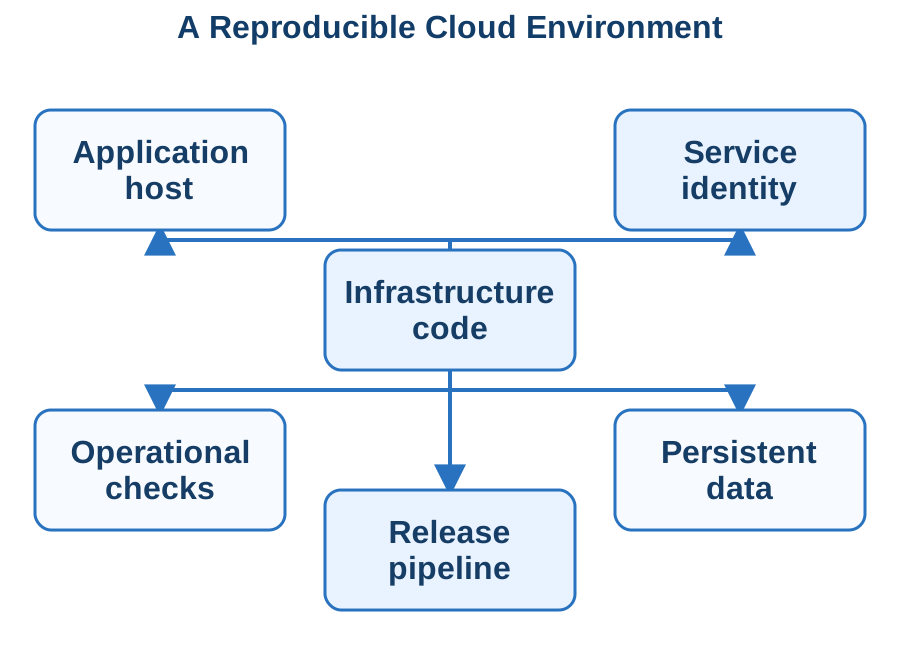
Azure resources can be defined with Bicep or Terraform, while AWS uses the selected Terraform or native infrastructure workflow. Configuration includes network boundaries, service identities, secret access, storage and application prerequisites. Deployment stages bind the infrastructure state to a release and compatible schema migration. We provide a reproducible environment, drift review, useful Azure Monitor or CloudWatch signals and a runbook for the agreed recovery scenario.
Infrastructure configuration is maintained as reviewed source where practical, with controlled differences between development, staging and production. The release process identifies resource prerequisites, application versions and data migrations. Your team receives topology, configuration, deployment instructions and recovery procedures that explain both how to create the environment and how to operate its state.
Exercise Deployment and Failure as Part of Acceptance
Acceptance exercises deployment, a failed dependency, secret rotation where in scope and restoration of the agreed state. We verify the served application independently from infrastructure provisioning. Handover includes the diagrams, configuration, measured limits and runbooks your team needs to operate the environment.
A recreated environment is checked for drift against its recorded resource configuration. Release rehearsals include a compatible database migration and an intentionally rejected deployment, with the previous generation still identifiable. Recovery evidence states the source generation and restored business operation, allowing the team to assess its actual recovery target rather than only successful resource creation.
Technologies & Integration
Discuss Your Web Project Back to Web Services