AI Services
AI Architecture
Sphere 10 designs AI systems around the business operation they must perform. We establish the model, data, application and infrastructure boundaries together, then prove the difficult assumptions before you fund the complete build. Our .NET engineering covers the product and integration layers; specialist training and inference components use the tools appropriate to their workload.
Start with a job that has a useful end result: an answered enquiry, a qualified lead, a confirmed booking, an approved quote or an order ready for dispatch. We trace that job through the people, records and systems involved, then decide where retrieval, a model, an agent or ordinary application code belongs. The design covers the complete solution rather than a chat demonstration.
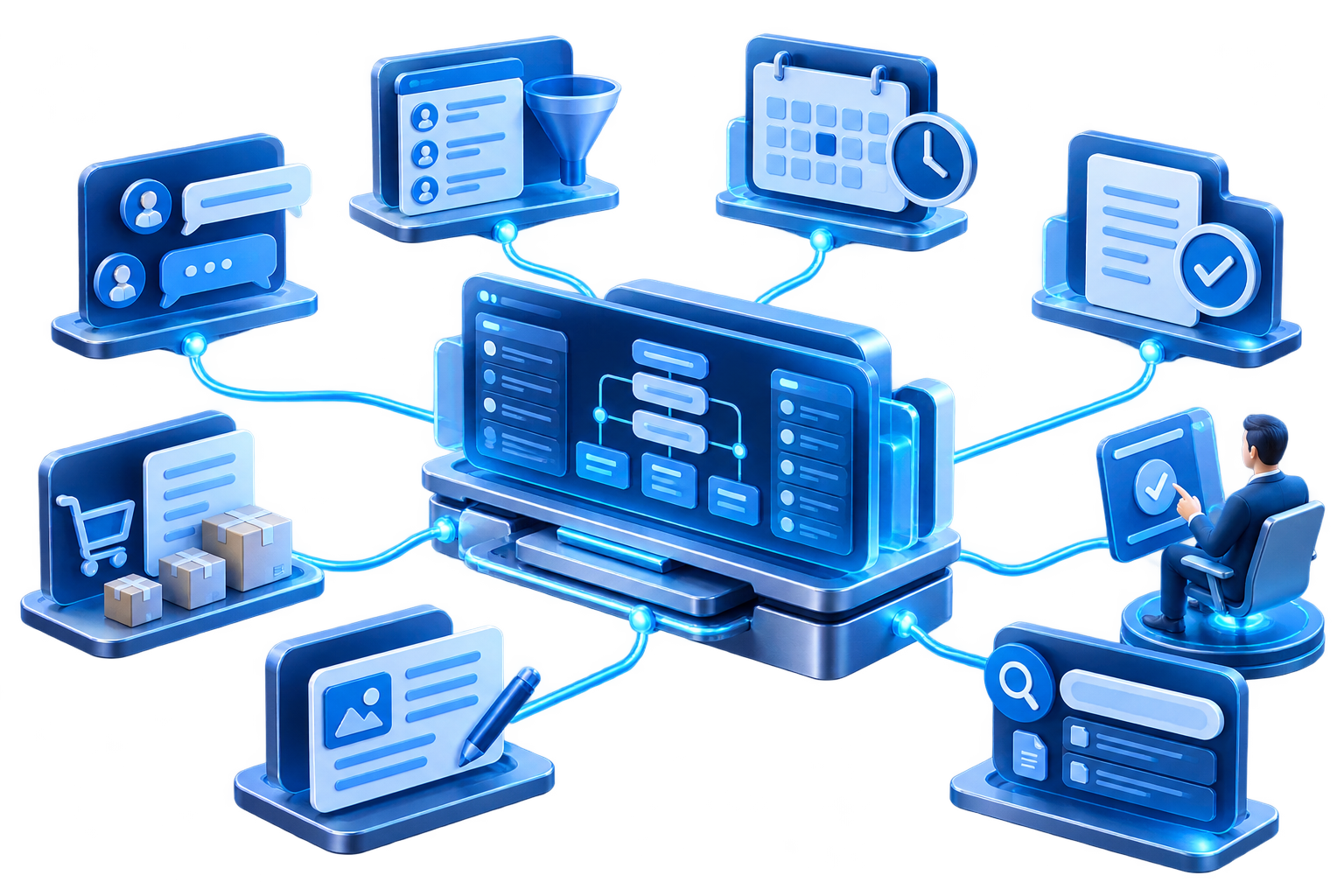
Resolve the Decisions That Determine the Build
We begin with representative work: the documents staff read, the decisions they make, the systems they update and the errors they cannot accept. That establishes whether the solution needs classification, forecasting, retrieval, generation, an agent or ordinary application logic. A working comparison against a simple baseline prevents an impressive demonstration becoming an expensive dependency.
We design hosted deployments on Microsoft Foundry , Amazon Bedrock and Google Vertex AI, alongside direct OpenAI, Claude and Gemini integrations. Private deployments use vLLM or SGLang for supported open-weight models; Ollama suits local development and selected smaller installations. We specify model and region availability, context limits, streaming, tool support, identity and network boundaries for the chosen deployment, then measure quality, concurrent load and operating cost against the same workload.
Choose the First Business Workflow
We establish what happens today, where work is repeated or lost, and the result your team expects to receive. The first scope might reduce unanswered enquiries, shorten quote-to-order handling or remove rekeying between a mailbox, CRM and accounts. Success is measured against that starting point: completed work, answer quality, staff handling time and operating cost.
Connect AI to an Engineered Application
Our Sphere10 Framework supplies application lifecycle, persistence and diagnostic foundations. Microsoft.Extensions.AI supplies IChatClient and IEmbeddingGenerator abstractions; Microsoft Agent Framework composes agents and explicit workflows. We define JSON input/output contracts, streaming and cancellation, provider-specific capabilities and the boundary to Python/PyTorch services. An ASP.NET Core application retains ownership of tenant identity, validated business records and authorized operations.
Make System Ownership Explicit
CRM records, mailboxes, calendars, stores, accounting systems and document repositories are connected through supported interfaces. During design we check the account plan, available permissions and integration limits. Prices, stock, resource capacity and eligibility remain owned by the systems responsible for those facts; a model may explain them but cannot invent or override them.
Our .NET services connect Microsoft Graph and Dynamics 365/Dataverse, HubSpot, Shopify and existing accounting or line-of-business APIs through their supported interfaces. We implement OAuth scopes, webhook signature checks, stable record mapping and idempotent updates. n8n, Make and Zapier suit connector-led orchestration; custom C# and Python services implement specialist data processing and model logic. The design identifies the system of record, replay boundary and operating owner for every integration.
Approval is designed into the workflow. An assistant may answer an approved policy question immediately, while a disputed refund or a proposed supplier payment goes to staff. The design names who may read information, prepare a change and commit it, together with the review queue and useful handover each exception requires.
Your Design Package
Approve the Architecture With Evidence
We review unsupported answers, unavailable providers, slow tools, denied permissions and interrupted jobs alongside successful examples. The handover contains source code for the spike, reproducible test inputs, measured results and the decisions that remain open. Project Design is paid time and materials. Its output gives both parties a concrete basis for a fixed-price rapid application build, rather than a quote built around undefined AI behaviour.
Each unresolved dependency has a named owner and an agreed next step.
From Project Design to Accepted Delivery
Paid time-and-material Project Design uses representative enquiries, documents, campaign briefs or order paths to agree the workflow, system access, data, acceptance examples and build plan. We test uncertain model behaviour in a working slice before pricing the complete delivery. Difficult training, private knowledge and self-hosted inference remain part of the same engineering scope when the task requires them.
Project Delivery is a fixed-price rapid application development build with an initial deposit, one consolidated client change round within the agreed scope, and an acceptance payment on accepted delivery. You review working software against the agreed examples. Additional scope is agreed separately. A dedicated QA round can follow on time and materials or a fixed price, according to the engagement.
Project Execution can continue under a negotiated SLA for deployment, monitoring, support and improvement. We identify model usage, hosting and third-party subscriptions separately from build and support fees. The delivery process and the responsibility for source content, credentials and operating decisions are agreed before handover.
Platforms & Tooling
.NET Microsoft.Extensions.AI Microsoft Agent Framework Semantic Kernel Python OpenAI Claude Gemini
Discuss Your AI Project Back to AI Services
Model Training & Machine Learning
Sphere 10 builds models for decisions your organisation needs to make: forecasting demand, classifying documents, detecting anomalies, recognising images or adapting a language model to a defined task. We own the work from dataset construction and experimental baselines through to a reproducible model artefact and a usable application interface.
Custom training is useful when a defined decision needs more than a prompt or a search over documents. Examples include classifying incoming documents, prioritising an enquiry for staff, forecasting demand or detecting an operational anomaly. We agree the input available at decision time, the result the application needs and the cost of a wrong prediction before choosing the model.
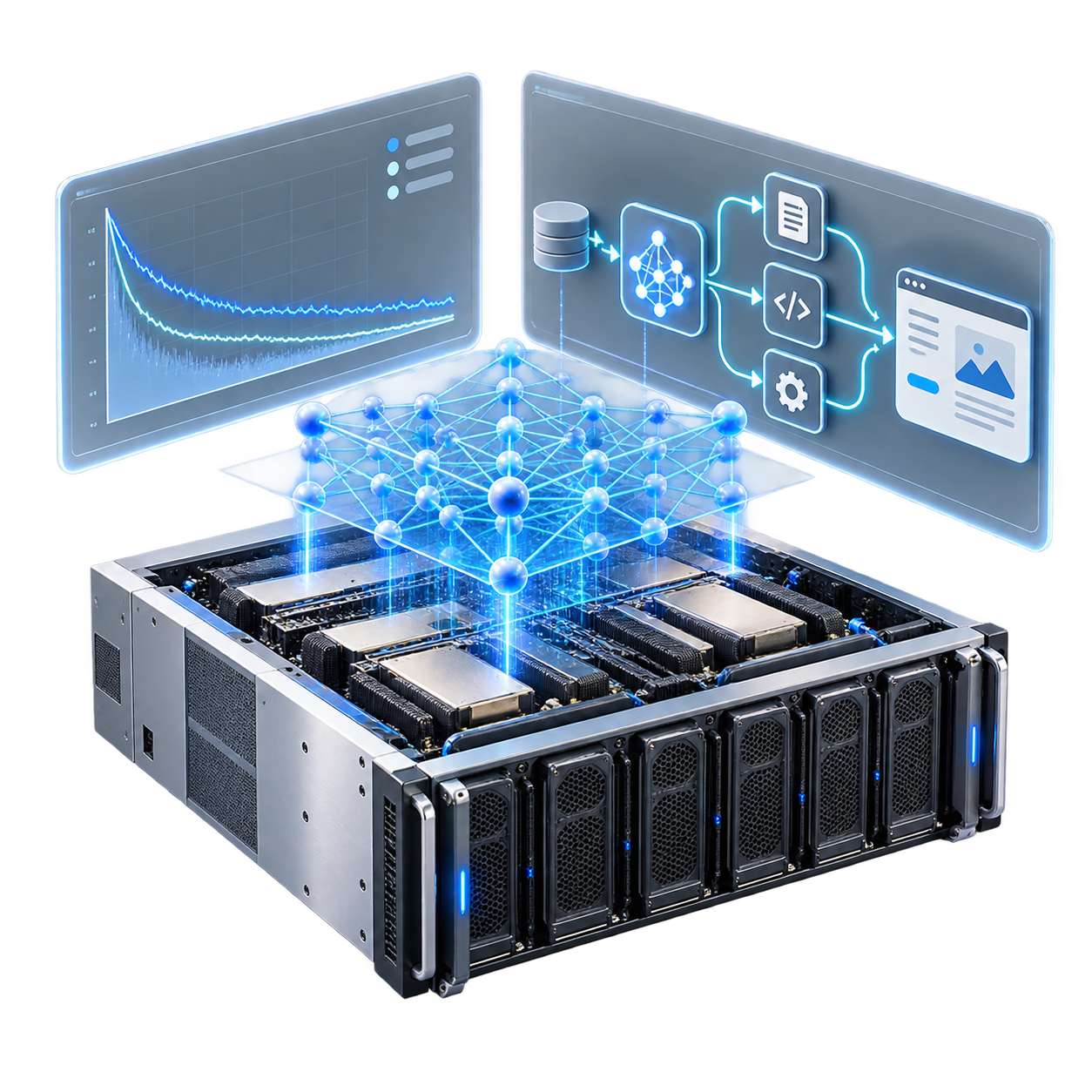
Choose the Training Method From the Task
A training engagement starts with the prediction target and the cost of being wrong. We inspect how labels are produced, whether historical data reflects future use and whether the proposed inputs will actually exist at prediction time. Time-based and entity-based splits are used where random splitting would leak information between training and evaluation.
For tabular classification, regression and ranking we build scikit-learn pipelines and compare XGBoost, LightGBM or CatBoost with an appropriate baseline. Forecasting uses time-aware backtesting and an explicit prediction horizon. Vision and language workloads use PyTorch and Hugging Face Transformers. For language-model adaptation we implement supervised fine-tuning with PEFT LoRA or QLoRA , and TRL preference training such as DPO when suitable preference pairs exist. Tokenization, masking, adapter targets and quantization are part of the delivered configuration.
Use the Model Where It Improves the Decision
Model adaptation is separately justified. An internal assistant may need better source material or retrieval rather than new weights. A marketing workflow may need approved examples, prompts and review criteria rather than training from scratch. Where adaptation is warranted, its dataset, held-out evaluation and deployment target become explicit deliverables.
Deliver an Experiment You Can Reproduce
Integrate Predictions Into .NET
We build native predictive pipelines with ML.NET and run supported exported models through ONNX Runtime in C#. Python/PyTorch models can also run behind versioned HTTP or gRPC inference contracts. We verify operator support, tensor shapes, preprocessing, numerical tolerance and CPU/CUDA execution against the training implementation. The application receives a documented score, class or forecast schema with reproducible examples.
Sphere10 Framework contributes data-access scopes, serialization and application composition around the model. Those mechanisms support controlled ingestion and persistence of results. They are separate from PyTorch or ML.NET training, and we keep that boundary explicit in the delivered design.
Acceptance Includes the Weak Cases
We agree evaluation measures before tuning: precision and recall, forecast error, false-positive cost, response time or another measure tied to the business decision. Acceptance covers unseen examples and degraded inputs, not just the demonstration dataset. You receive the training code, environment specification, model artefacts and retraining instructions, with limitations and drift indicators documented. A later change to labels, features or data distribution can then be assessed as a controlled model revision.
For a document or knowledge project, bring representative examples and the decisions staff make from them. We agree which formats, labels, missing fields and weak cases the build must handle. The accepted model package then feeds the reviewed document, sales or operational workflow through the application contract; new labels or business rules are a controlled scope change.
Platforms & Tooling
.NET ML.NET PyTorch Hugging Face PEFT scikit-learn XGBoost ONNX Runtime MLflow
Discuss Your AI Project Back to AI Services
Data & RAG
Sphere 10 builds retrieval systems that connect AI to the information your organisation owns. We engineer the ingestion, document structure, search, permissions and answer presentation together. The result is a knowledge capability inside your application, with sources that can be inspected and updates that can be traced.
Staff should be able to ask an operational question without first knowing which folder holds the answer. We connect manuals, Notion pages, shared documents, help content and business records into an assistant that returns useful references to the maintained source. Onboarding, product support, operating procedures, service manuals and project knowledge are concrete starting points.
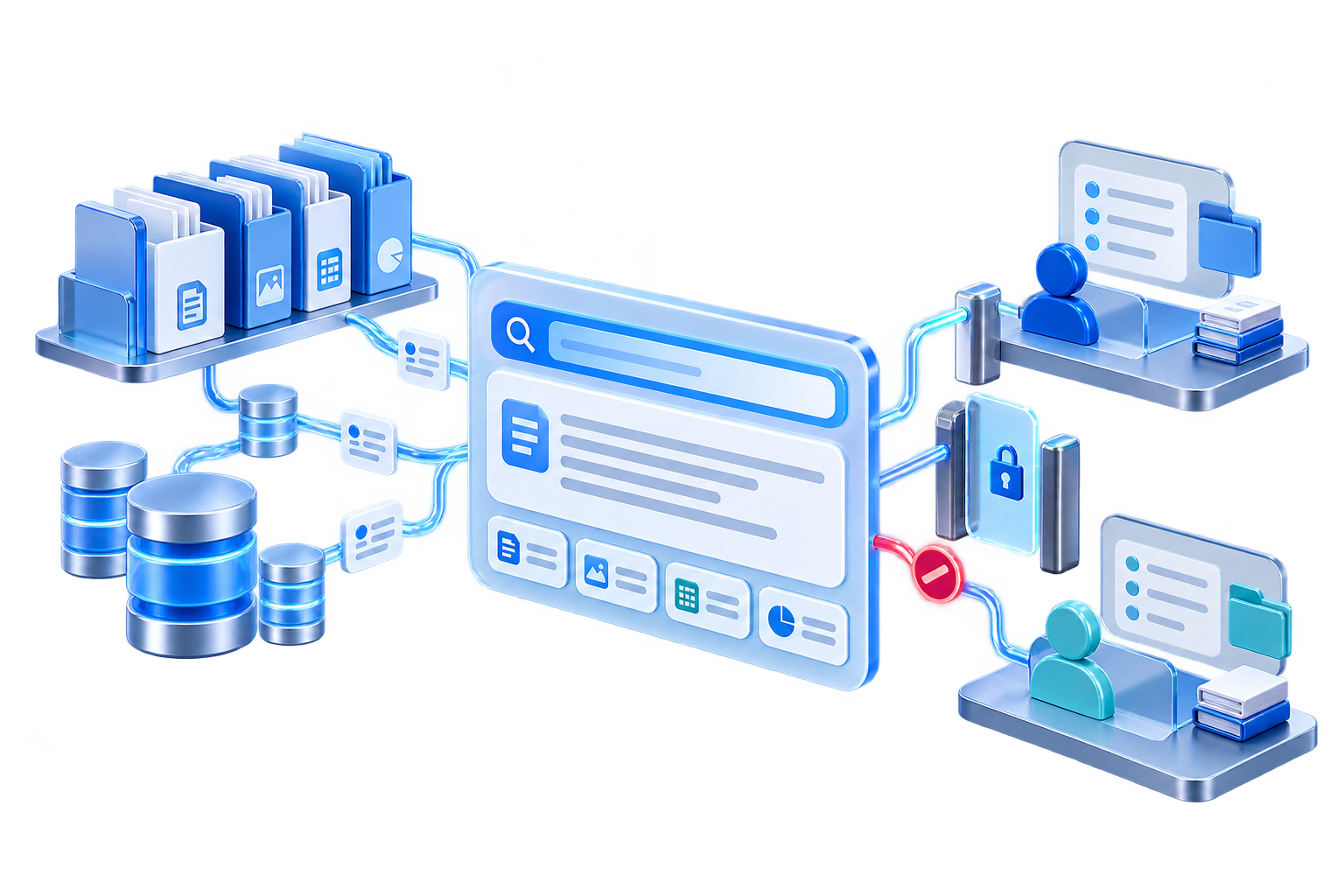
Preserve Meaning From the Source
A useful retrieval index starts before the embedding call. We identify authoritative records, duplicate copies, document versions, tables, attachments and access rules. Extraction preserves useful headings, identifiers and source locations so a returned passage can be explained in context. Chunking follows the document and question types; one fixed character count is rarely sufficient for every source.
For Notion content, our Local Notion product supplies an existing .NET foundation for downloading pages, databases, objects and attachments. We can build ingestion around that owned content pipeline. Search permissions, deletion propagation and the retrieval index remain explicit engineering responsibilities rather than capabilities we assume a content export provides automatically.
For a customer assistant, the source collection can include service descriptions, FAQs, specifications, opening hours, locations, preparation requirements and current policies. For staff, the useful result may be finding the current specification or the procedure needed to complete a job. Duplicate, stale or contradictory material is identified before it becomes an answer, and missing evidence remains visible rather than being replaced by a confident guess.
A source catalogue records document IDs, versions, access rules and refresh state. Microsoft Graph APIs ingest SharePoint/OneDrive content; Local Notion supplies our .NET Notion-page and attachment pipeline. LlamaIndex or LangChain can supply specialist parsing and retrieval components behind that ingestion contract. We preserve headings, tables and page/record citations, propagate source deletions, and re-embed affected content when the model or extraction schema changes.
Build the Retrieval Pipeline
We build Azure AI Search hybrid retrieval , PostgreSQL/pgvector indexes and Qdrant collections around the source and filtering requirements. BM25/full-text and dense-vector results can be fused with reciprocal rank fusion, then reranked against real questions. We configure HNSW or other supported indexes, embedding dimensions, metadata filters and score thresholds for the selected platform. The .NET query service applies identity and source permissions before supplying context to the model.
Turn Documents Into Reviewable Records
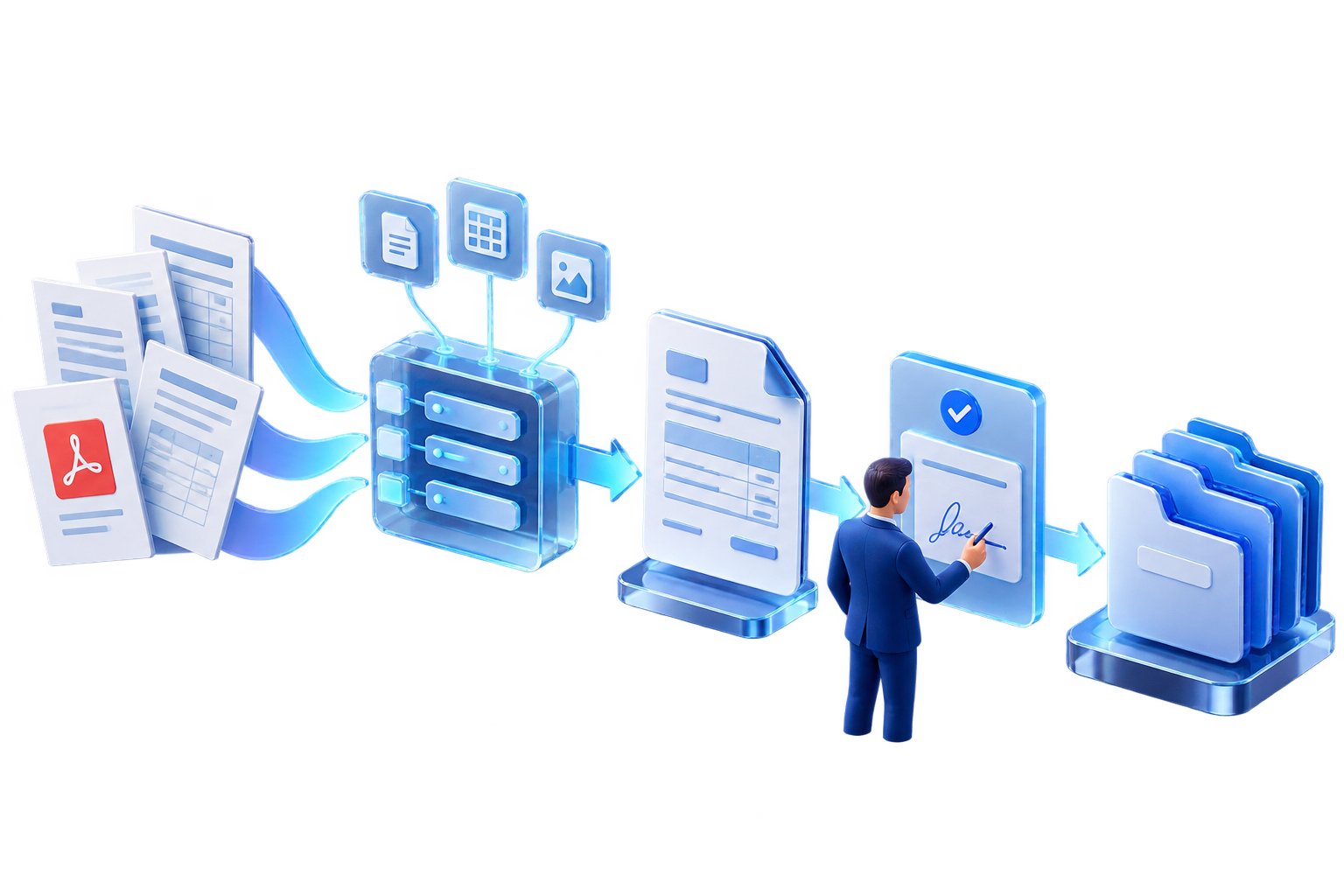
Document intake can classify attachments, extract invoice or application fields and identify missing information. The original file and supporting evidence stay attached to the proposed record. Staff can compare a value with its source and amend it before approval, instead of rekeying the same details between systems.
For scanned PDFs and forms we integrate Azure Document Intelligence , Amazon Textract or an appropriate OCR/parser pipeline. Layout, tables, key-value fields and source coordinates feed a typed extraction schema. The .NET application validates amounts, dates, supplier IDs and required fields against business records, attaches the original document and evidence, and presents ambiguous values in an editable review screen.
The source and extraction schema are separate from the next business action. Approved fields can populate a quote, onboarding record or agreement; commercial calculations, legal wording, signature and payment approval stay in their controlled workflow. The handover includes format coverage, extraction rules, evidence links and cases for missing fields and amended source documents.
Test Access and Answer Quality Separately
Retrieval that returns the right text to the wrong user has failed. We test tenant and role boundaries before context reaches the model, including indirect access through cached results. Answer checks cover unsupported questions, conflicting sources, missing attachments and documents containing instructions that should be treated as data.
Acceptance measures retrieval relevance and the usefulness of the completed answer separately. You can see whether a failure needs better source material, another search configuration or a change to generation, instead of repeatedly changing prompts without identifying the cause.
A useful knowledge assistant can live inside an internal web application with the correct identity and source links. Once retrieval is useful, a narrowly defined action can prepare a support task or a draft handover. Each action receives its own application contract and permission check; access to a document does not automatically permit an operational update.
Operate the Knowledge Collection
Handover includes connector configuration, index definitions, evaluation questions, update schedules and runbooks for failed imports and rebuilds. We demonstrate a source update and a deletion travelling through to the served result. That gives your team a maintainable knowledge service with a known refresh boundary, rather than a chatbot tied to a one-off document upload.
Project Design proves representative staff questions and source documents before the fixed-price assistant or ingestion build is agreed. Acceptance demonstrates useful citations, access boundaries, missing-information behaviour and a source update reaching the served answer. Your team receives content-update procedures and a maintained evaluation set; model adaptation or a private serving environment is included only where the task needs it.
Platforms & Tooling
.NET Microsoft.Extensions.AI Local Notion PostgreSQL pgvector Qdrant Hugging Face Python
Discuss Your AI Project Back to AI Services
Agentic Automation
Sphere 10 builds agents that carry out useful work across your applications, documents and business systems. We combine model reasoning with explicit workflows, typed tools and application controls. The scope can range from a supervised research assistant to a multi-step operational process with approvals and recoverable execution.
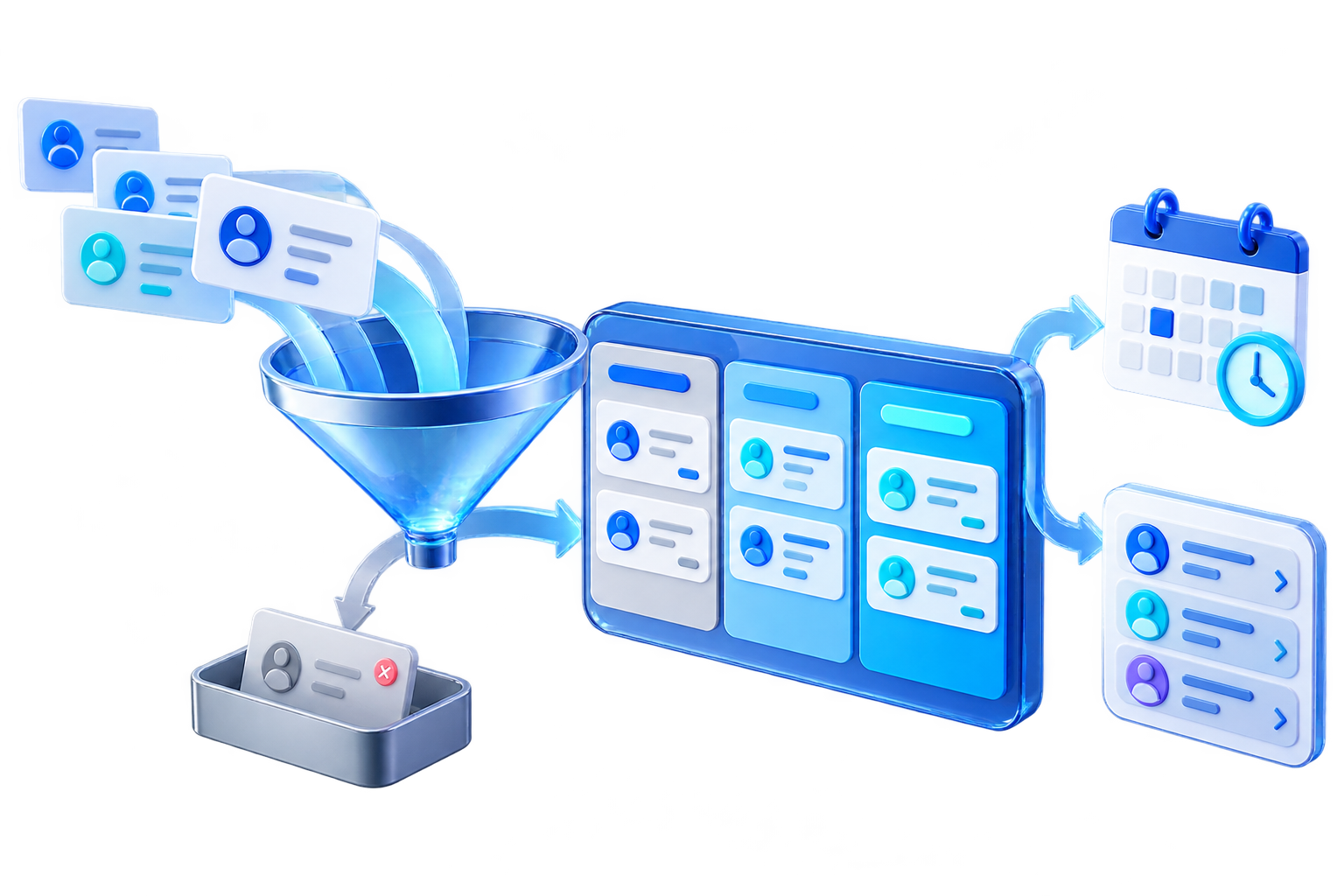
A web form, website conversation, email or SMS can start the same lead-intake workflow. We collect the service or product requested, location, timing and qualification details, ask for missing information where appropriate and match the existing contact. The result is a useful CRM record and the next task for the right staff member, with the enquiry source retained.
Define What the Agent Can Actually Do
We map the task into observation, planning, tool execution and confirmation. Deterministic steps remain ordinary code; model judgement is used where it adds value. Each tool has an input contract, an identity, a permission boundary and a defined result. Reading a record, proposing an update and committing an update are separate operations when the business requires review.
We implement .NET agents and workflow graphs with Microsoft Agent Framework , and integrate existing Semantic Kernel estates. Python solutions can use LangGraph persistence and interrupts or Pydantic AI for typed model interactions. Model Context Protocol exposes compatible tools with explicit transport authorization. We implement input schemas, OAuth scope and audience checks, per-tool application permissions, and a durable approval record before an operation changes a business system.
Diagram source
flowchart TD
  Q["Customer or staff request"] --> R["Permission-filtered retrieval"]
  R --> M["Model + structured output"]
  M --> T["Typed business tool"]
  T --> A{"Approval required?"}
  A -->|Yes| H["Staff approval"]
  A -->|No| S["CRM or calendar action"]
  H --> S
  S --> E["Run trace + evaluation"]
classDef default fill:#eaf2ff,stroke:#2f77cb,color:#17365d,stroke-width:1.5pxLead Intake, Inbox and Follow-Up
Follow-up follows the enquiry stage. A requested brochure, appointment link or reminder is sent from the agreed business account; replies update the same conversation. A response, decline or booking changes or stops the sequence. Existing customers can enter a separate post-order, appointment or delivery sequence, with staff able to inspect sent messages, pause the process and take over.
HubSpot CRM APIs or Dynamics 365 Dataverse Web API own contacts, opportunities and activity records. Microsoft Graph or Google Workspace APIs supply mailbox events and conversation identifiers. We implement webhook validation, delta/change tracking where supported, duplicate contact matching and idempotent writes to the agreed CRM fields. A .NET job ledger records each external result; LangGraph can retain reasoning/workflow state while transactional application code controls whether an operation may be attempted again.
For support inboxes, the workflow classifies messages, collects authorised records and prepares a reply in the team’s voice. Previous correspondence, attachments and customer identity remain attached to the enquiry. Replies can enter a staff review queue or a narrowly approved automatic class. Post-service feedback, review requests and complaints follow your agreed process and create follow-up tasks with the source conversation; an unhappy response reaches a person who can resolve it.
Build Recoverable Automation
Bookings, Visits and Course Enrolments
A booking must represent capacity the business can fulfil. The workflow explains the service, gathers intake information and checks staff calendars, resource capacity, service duration, travel time and cut-offs. The scheduling system creates the confirmed appointment; the scope defines when a customer may confirm and when staff approval is required.
We connect Microsoft Graph calendar APIs , Google Calendar or the existing booking platform for availability, event creation, rescheduling and cancellation. We map staff/resource calendars, service duration, travel buffers, time zones and provider event IDs. Clinics and consultants receive approved intake and reminder workflows; field-service teams receive site details and allocation records. Clinical decisions remain with qualified staff.
Course workflows handle individual or group enrolments, match participants to the requested course and pass structured records to the agreed learning or student-management system. Capacity, prerequisites and payment state come from their authoritative records. Staff approve exceptions before treating an enrolment as accepted.
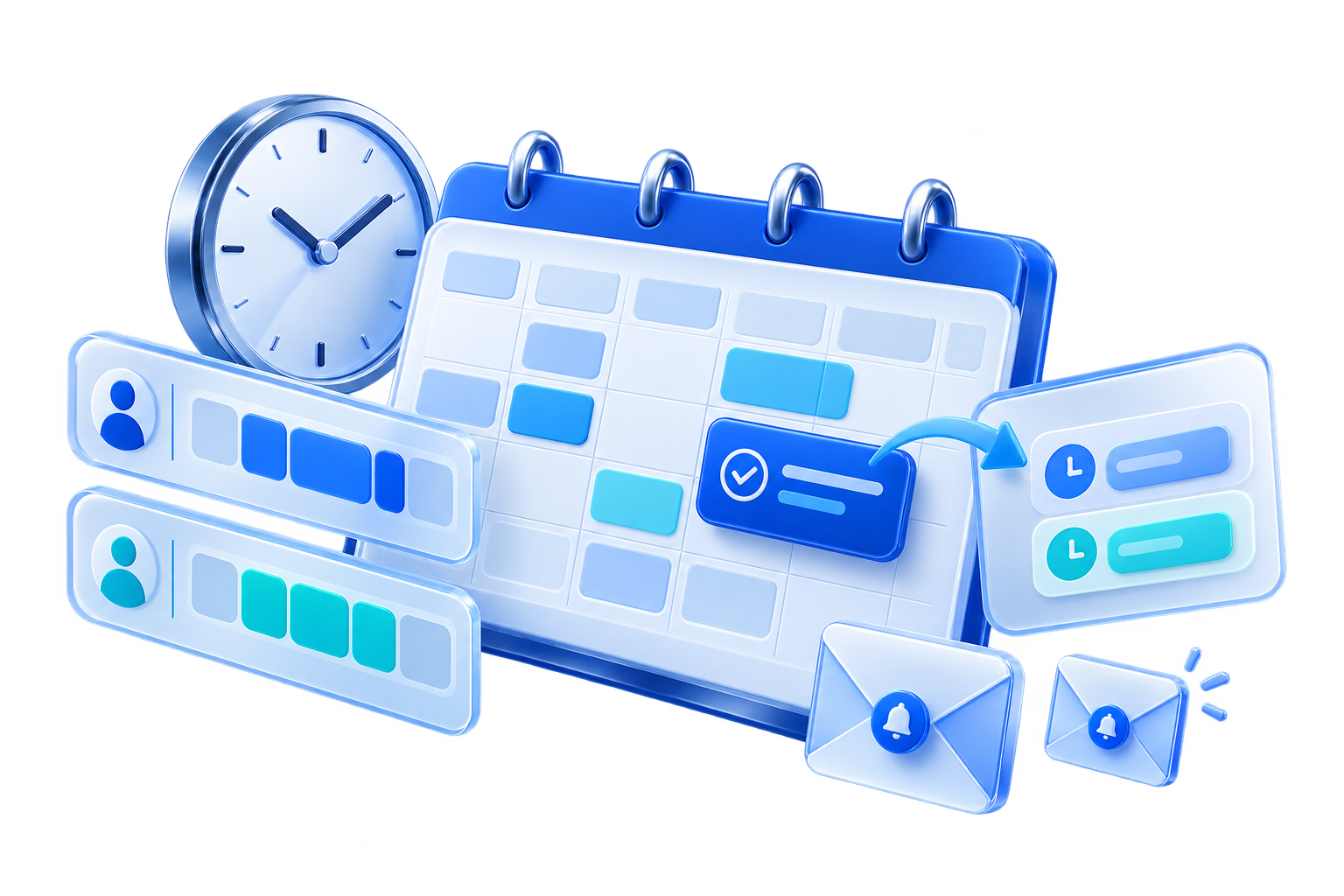
Joining instructions, venue details, required documents and student email reminders follow the accepted enrolment. Course changes, cancellations and incomplete registrations update or stop the sequence. C# services preserve appointment identifiers, time zones and change state, so a retried request does not create a second appointment. The operating queue exposes conflicts, missing details and requests outside normal rules.
Use .NET for the Business Boundary
Sphere10 Framework supplies application composition, logging, serialization and communication mechanisms for the surrounding services. We use these established patterns to connect agents to business operations through tested code. The agent receives a constrained capability; it does not receive unrestricted database access merely because it can generate a query.
For multi-agent work, responsibilities and shared state are defined explicitly. We test whether the extra coordination improves the result before adopting it. A single agent with a clear workflow is often easier to operate than several agents repeatedly revising each other's output.
Quotes, Agreements and Signed Records
Approved extraction results and customer records can populate a quotation with selected specifications, images, scope, options and terms in a consistent PDF or editable document. Construction quotes, equipment hire, service proposals and onboarding use controlled templates; calculations and commercial terms remain explicit application logic. Your team supplies and approves its commercial or legal wording.
An accepted quote can become a job or draft invoice through an agreed state transition, retaining earlier versions and the approval authorising the change. Accounting connections supply payment status, statement data and an approved reminder schedule. The model does not invent a balance or authorise a payment.
Where signing is included, an approved provider such as Docusign prepares envelopes, returns signature status and files the resulting agreement against the correct customer or job. Incomplete signatures, declines and reminders have defined actions. The provider response is recorded before advancing the process, with Sphere10 Framework data-access and transaction mechanisms supporting the .NET working record where appropriate.
Orders, Dispatch and Scheduled Pickup
Order events can become a preparation, dispatch or collection queue with required details checked, pickup location matched and work grouped by date. Food retail, wholesale and multi-site collection need an accurate view of what must be prepared, where and when. Equipment or specialist retail can include reservation, hire and document steps. The workflow follows the order and inventory system’s actual state transitions.
Duplicate events and incomplete orders are identified before they create repeated jobs. Staff see the exception, its record context and what has already completed. Accepted changes to stock, pickup details or partial fulfilment update the existing job rather than creating an unexplained second path. Notifications and handover follow the same recorded state.
Accept the Workflow, Including Interruptions
Acceptance scenarios include denied access, invalid arguments, tool timeouts, duplicate events, misleading document content and an interrupted run resumed later. We agree which outcomes require a human and which can be retried automatically. Handover includes tool contracts, workflow definitions, evaluation cases and runbooks for pausing, inspecting and recovering work. Your operations team can then manage an automation service rather than supervise an unexplained conversation log.
We define the first complete path during paid Project Design: a real enquiry to its CRM task, a request to a confirmed booking, a document to its approved record or an order to completed fulfilment. Fixed-price delivery names the channels, systems, document variants, templates, events and exceptions included. Additional channels, deeper CRM changes or new workflow branches are separately agreed.
Platforms & Tooling
.NET Microsoft Agent Framework Microsoft.Extensions.AI Semantic Kernel MCP Python OpenAI Claude
Discuss Your AI Project Back to AI Services
AI Product Integration
Sphere 10 integrates AI into the software people already use. We build document assistants, guided analysis, classification, drafting and task-specific copilots inside web, desktop and backend applications. The feature shares the product's identity, data boundaries and operational controls instead of becoming a disconnected chat window.
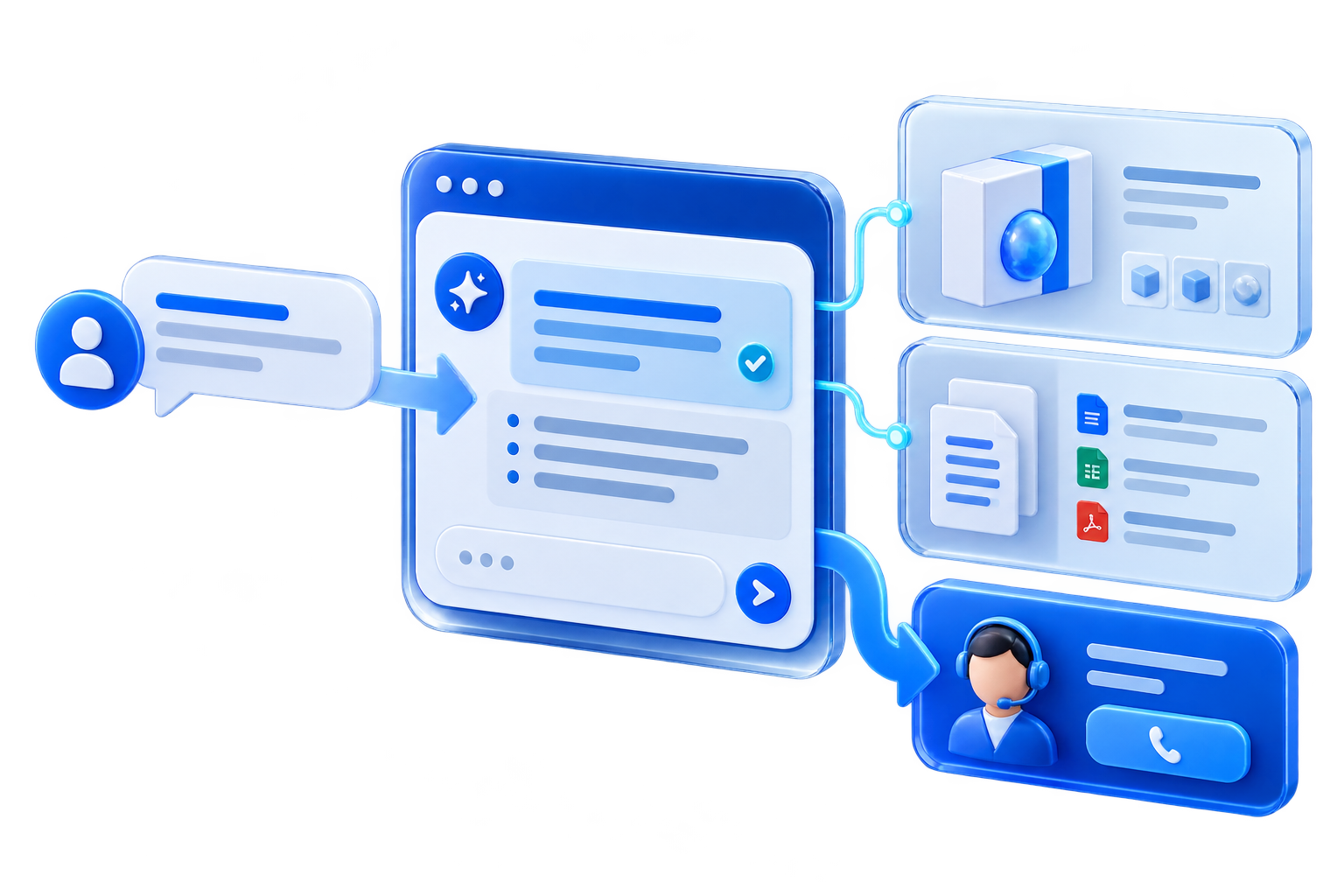
We build website, product and service assistants that understand an enquiry, find the relevant approved information and take the next permitted step. The assistant can explain a service or policy, help choose a suitable product or collect the details of a support request. When a person takes over, the conversation, answer already given and relevant references travel with the handover.
Design the User Interaction Around the Work
We establish the input, expected output and the next action the user needs to take. That may mean selecting source records, reviewing a proposed change, comparing evidence or accepting a structured result. Streaming output, cancellation, progress and error recovery are designed as part of the feature. A failed model call should leave the rest of the application usable.
Our Sphere10 Framework includes ASP.NET Core integration and a Blazor application workspace with typed CRUD, validation, dialogs and retained screens. These are practical building blocks for an AI feature that must work alongside ordinary business forms and records. We select the product interface independently from the model provider.
Customer, Product and Staff Assistants
Routine questions can use approved FAQs, service descriptions, opening hours, locations, preparation requirements, product specifications and the applicable shipping, returns or warranty policy. A help request can return the right article or collect useful support details. Questions about an individual account, booking or order fetch the authorised record instead of a generic generated answer.
For internal work, an assistant can live in the staff web application or another supported working surface, with links to the source record. Preparing a support task or draft handover is an explicit, permission-checked action. Our .NET layer provides the interface and integrations; Sphere10 Framework’s composition, settings, data-access and diagnostic mechanisms support that application where appropriate.
The staff handover includes the customer’s question, what has already been answered, relevant product or service references and details collected with permission. Complaints, uncertain answers and exceptions follow the rules you approve. ASP.NET Core endpoints connect models and business systems while existing mail or helpdesk interfaces can remain the staff working surface.
Keep the Model Behind a Stable Contract
We integrate Microsoft.Extensions.AI IChatClient and embedding clients into ASP.NET Core and Blazor applications, using provider SDKs for features specific to OpenAI, Azure OpenAI, Claude or Gemini. Structured outputs map responses into explicit JSON/C# schemas. We implement streaming updates, cancellation and bounded tool calls, then validate product IDs, account references and proposed changes against the current user and business records.
ASP.NET Core endpoints expose versioned OpenAPI contracts, with OpenID Connect sign-in and OAuth access tokens for protected operations. Blazor/SignalR or server-sent events carry incremental progress to the interface. Background document and image jobs use durable records, bounded workers and retryable status endpoints. We test provider rate limits, partial streams, cancelled requests and tool timeouts alongside successful results, including the effect of a model change on the feature contract.
Connect the Storefront to Current Records
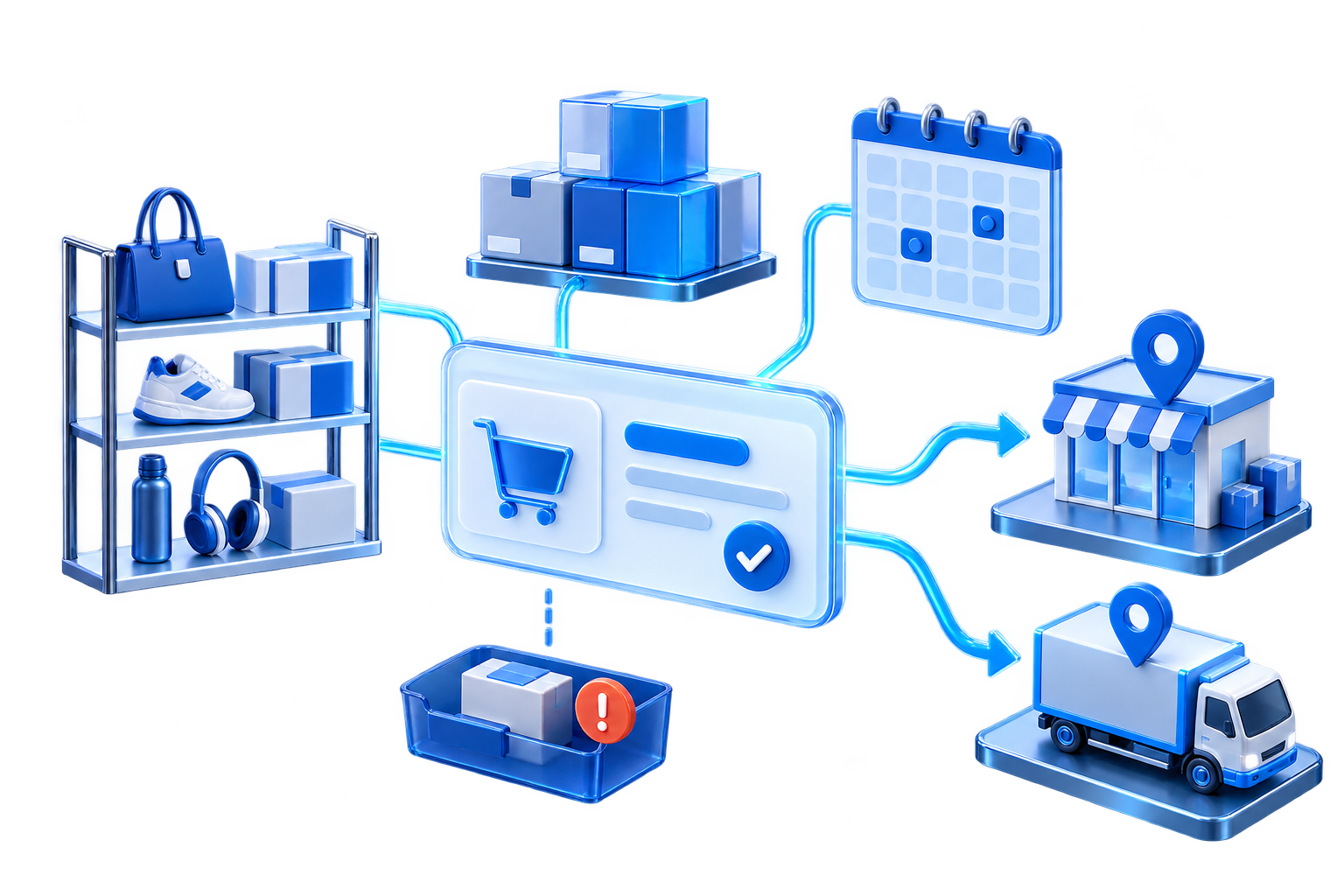
A commerce assistant compares product attributes and options against the maintained catalogue and current availability, then directs the customer to a suitable item. Compatibility, substitutions and restricted claims follow your rules. Authenticated order questions use the correct customer and order, with shipping updates, collection instructions and returns drawn from the responsible record or policy. Refund decisions, special commitments and stock investigations go to staff with context attached.
Shopify, WooCommerce and custom stores are assessed through supported APIs and events. The design names which system owns products, available quantities, prices, order status and customer details, including the required ERP, warehouse, accounting or spreadsheet connections. .NET services handle transformation, validation and the durable job record; deterministic rules control quantities, totals and permitted changes.
The delivered feature includes the agreed catalogue, order and fulfilment connections, a product or order assistant, and the operating view and staff notifications needed for preparation, pickup or dispatch. Its recoverable event handling is tested as part of the complete order journey, rather than treating a successful chat response as fulfilment.
A Complete Product Feature
Content, Search and Campaign Production
An AI content feature can turn product changes, service notes, staff expertise and approved references into structured briefs and draft articles. Each brief names its audience, channel, factual sources and required action. Drafts keep their references and review status so staff can check the substance before approving the next production step.
Search content can include titles, summaries, metadata and internal-link suggestions, with missing material and inconsistent terminology flagged for review. The editorial plan comes first; a generated keyword list or a volume of posts does not establish useful content. An approved article or campaign brief can then become email, newsletter and social drafts in the correct format and brand voice.
A publication calendar keeps assets, review state and destination together. Publication waits for your team’s approval at the agreed release point. Image and video generation can prepare campaign illustrations, product scenes, storyboards, captions and draft sequences from approved assets. Reusable banners, icon sets and brand-asset variations follow the approved style guide. Tourism, training and product marketing use the same production controls with different source material; acceptable generated imagery, likenesses and licensed assets are agreed during design.
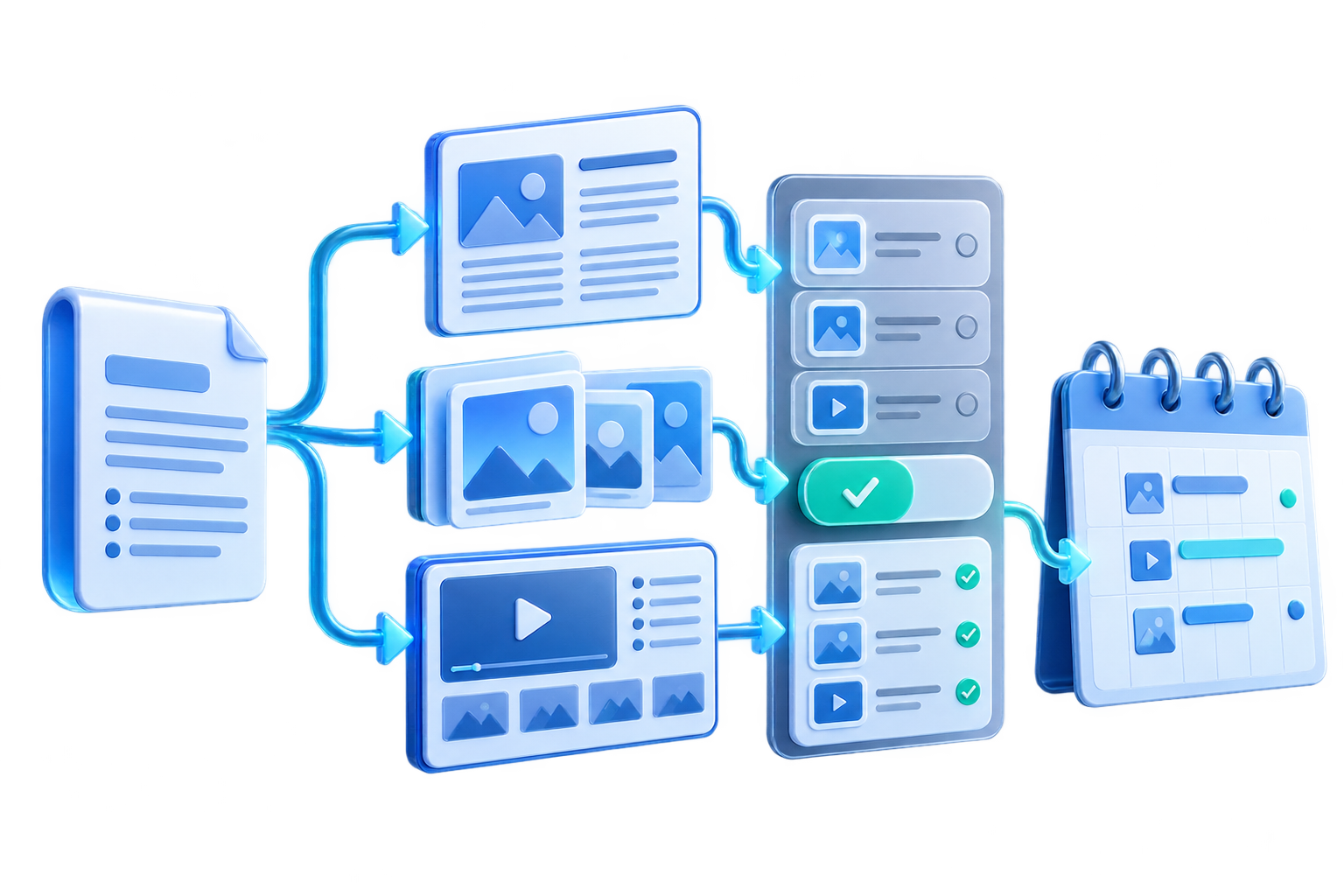
Notion and Local Notion provide an owned content and publication pipeline; WordPress REST APIs, Shopify Admin GraphQL and supported campaign APIs can connect existing platforms. We define content/asset schemas, draft and approval states, webhook authentication and the final publication operation. A .NET service preserves source references, provider request IDs and asset versions across text, image and video jobs, while the CMS remains the editorial working record.
The deliverable covers briefs, sources, drafts, assets, publication state and prompts/templates grounded in your audience, channels and approved brand examples. It includes the agreed text, image or video connections and CMS, newsletter or social-publishing integration. Review criteria include factual accuracy, tone, asset rights, broken links and successful publication. Usage, cost, failed jobs and pending approvals remain visible with a route to the original brief and source assets.
Release Against Representative Work
We test the feature with the same kinds of records, documents and permissions users will encounter. Acceptance covers output usefulness and the complete interaction, including a slow or unavailable provider. You receive source code, deployment configuration, integration documentation and the evaluation examples. Our role can end at an accepted release or continue into separately agreed QA and operational support as the product and model providers evolve.
For a customer assistant, acceptance includes the maintained answer set, product or account lookups, conversation rules, staff escalation and an operating view of unanswered questions, usage and handovers. We exercise outdated information, difficult requests and unavailable systems as well as successful answers. Bring real enquiries and the information staff consult to define the first useful scope.
For content production, one approved campaign supplies the source assets, review decisions and acceptance examples for the fixed-price build. The delivered process has a defined handover; additional channels, creative formats and continuing operation are agreed separately. Booking, CRM, document and order actions use the controlled workflow behind the interface.
Platforms & Tooling
.NET ASP.NET Core Blazor Microsoft.Extensions.AI Semantic Kernel OpenAI Claude ONNX Runtime
Discuss Your AI Project Back to AI Services
AI Deployment & MLOps
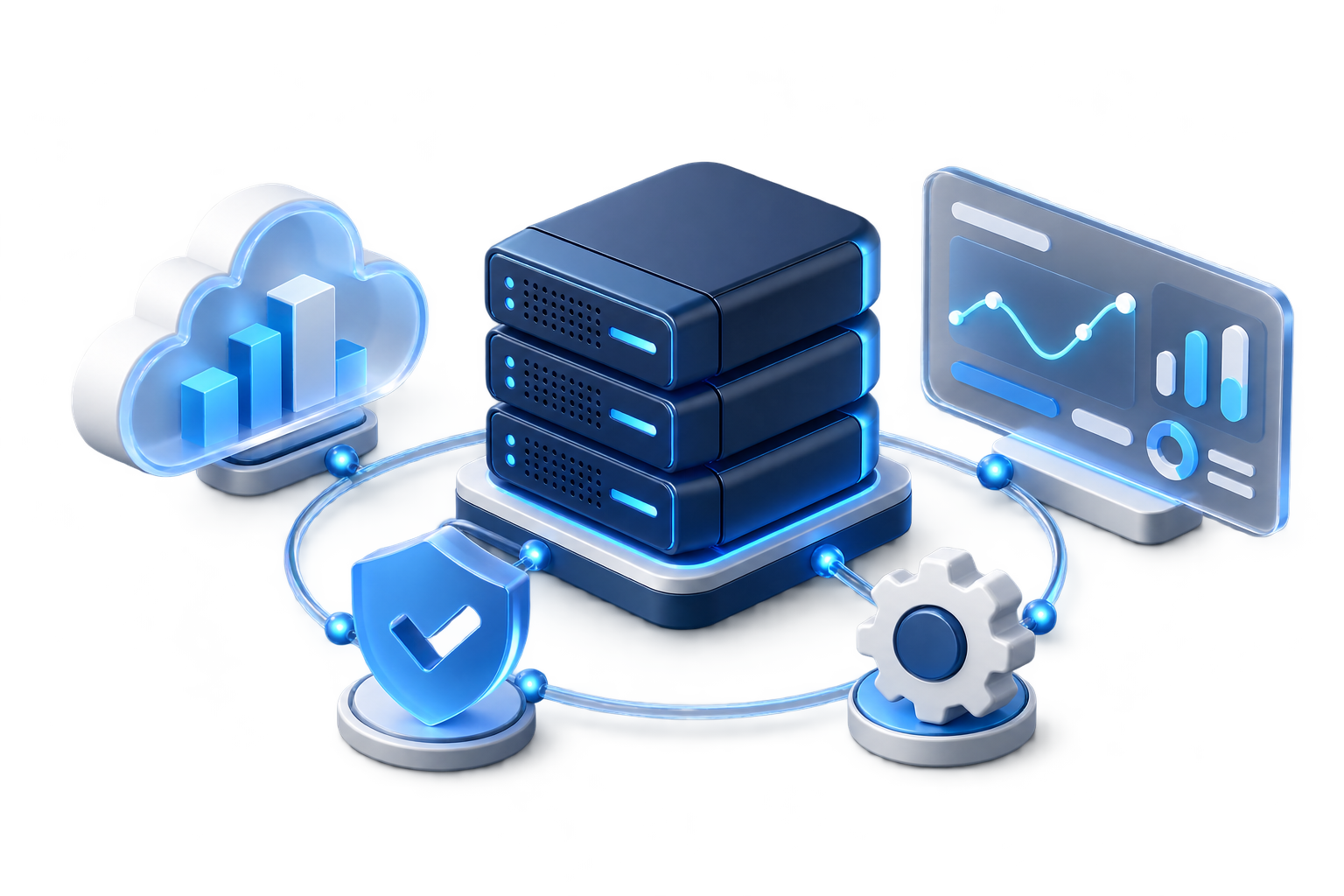
Sphere 10 takes AI workloads from a working model to an operated service. We package inference, application integration, evaluation and release controls together, with clear ownership of data, compute and production state. The deployment can use managed model services, dedicated GPU infrastructure or a private environment according to your requirements.
An operated AI service includes the business work around the model: knowledge refreshes, unanswered enquiries, pending approvals, booking reminders, incomplete documents, content jobs and order handovers. We make those queues, integration failures and responsible owners visible, so staff can tell whether work completed and what requires attention.
Size the Service Against Real Traffic
Capacity planning starts with model size, context length, output length, concurrency and the response time users need. We measure cold starts, time to first output, sustained throughput and memory pressure using representative requests. GPU selection and quantisation follow those measurements; a model fitting into memory does not establish that it can serve the required load.
We deploy supported open-weight language models with vLLM or SGLang, and predictive or multi-model pipelines with NVIDIA Triton Inference Server . ONNX Runtime supports suitable CPU/CUDA models inside .NET. Managed alternatives include Microsoft Foundry/Azure Machine Learning, Amazon Bedrock/SageMaker and Google Vertex AI. We select batching, model replicas, tensor/pipeline parallelism and quantization against measured context lengths, concurrency and latency.
The operating baseline includes completed workflows, answer quality, response times, staff handling time and model/provider cost. A fast model is not sufficient if an appointment never reaches the calendar or a customer reply is never sent. We identify the record and confirmation that establish completion for each agreed channel.
Make a Model Release Reversible
Keep Business Changes Controlled
Policies, source documents, product data, prices, booking rules and approved message templates can change independently from a model release. We record who maintains each source and how updates, deletions and permissions reach the served result. Content approvals, document versions and workflow configuration are traceable alongside prompts and model settings.
For communications and campaign production, staff can inspect pending approvals, failed or incomplete jobs, usage and cost, then pause or resume the defined process. Booking cancellations and declined signatures must change their reminders; an already completed order or CRM action must not repeat when a worker recovers.
Connect Experiments to Operations
MLflow Tracking and Model Registry link dataset/configuration revisions, experiment runs, model signatures and version aliases to the deployed package. OpenTelemetry traces correlate .NET requests, retrieval and model/tool calls; Prometheus and Grafana expose queue depth, GPU utilization, time to first token, output throughput and error rates. We keep operational metrics separate from the task-quality evaluation set and control whether prompt/output content is recorded.
Our .NET application and deployment experience includes Local Notion , where source content, rendered output and served files have distinct verification boundaries. We apply that same discipline to AI: a model saved, a container healthy and a useful response served are separate checks.
The handover names source-content owners, integration accounts, exception queues, failed-import procedures and the route back to the affected record. Knowledge-update monitoring, customer escalations, order recovery and publication state are checked against the useful business result. That operating view is separate from infrastructure health and model-quality telemetry.
Hand Over a Service Your Team Can Run
Acceptance includes controlled overload, interrupted requests, a failed dependency and a rollback to the previous accepted version. We document recovery objectives, backup scope, alert thresholds and who responds to each class of incident. The handover contains build definitions, infrastructure configuration, deployment and recovery runbooks, and measured operating limits. Continuing model updates, performance review and support can be covered by an agreed execution SLA with defined responsibilities.
Project Execution Under an Agreed SLA
After the fixed-price build is accepted, deployment, monitoring, support and ongoing improvement can continue under a negotiated SLA. We agree service coverage, response expectations, ownership of credentials and integrations, source-content responsibilities and who may approve operating changes. Model usage, hosting and third-party subscriptions are identified separately from build and support fees.
A dedicated QA round may be time and materials or fixed price, depending on the engagement. New channels, schedule changes, additional creative formats, model updates and deeper integrations are agreed work, with acceptance and handover appropriate to the change. The SLA states responsibilities and recovery expectations; it does not rely on an unsupported blanket promise about a model or external provider.
Platforms & Tooling
.NET vLLM ONNX Runtime MLflow PyTorch Hugging Face OpenTelemetry NVIDIA CUDA
Discuss Your AI Project Back to AI Services